
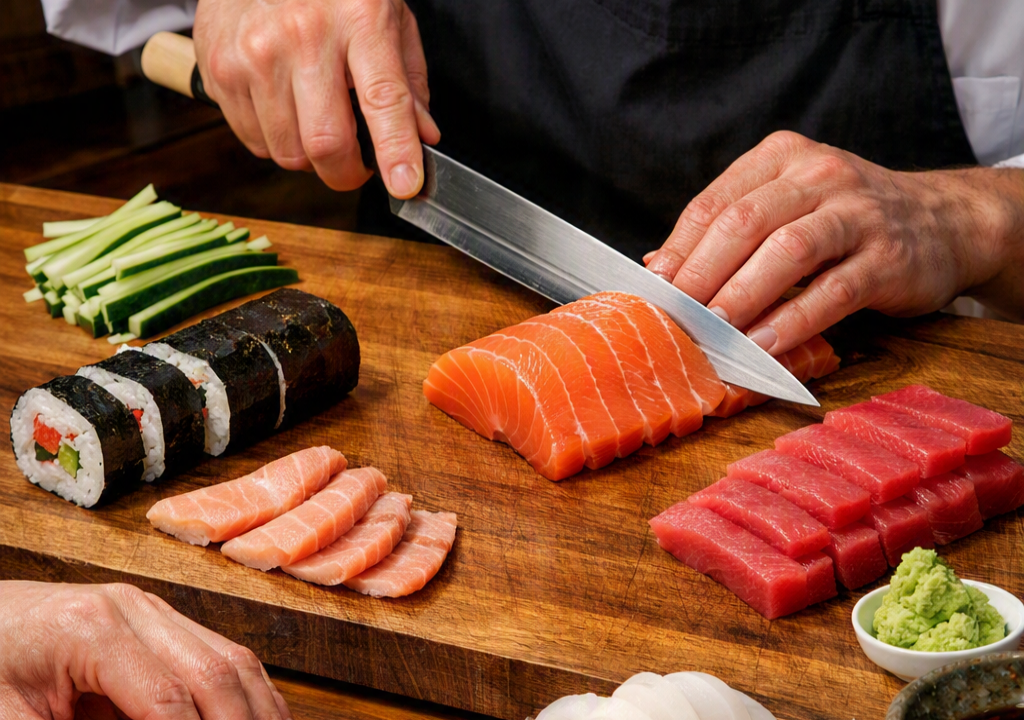
When you sit down for a beautifully prepared sushi meal, it is easy to focus on the freshness of the fish, the delicate flavour of the rice, or the elegant presentation on the plate. But behind every perfectly cut slice of sashimi and every beautifully shaped piece of nigiri is a skill that takes years to master: the knife skills of a sushi chef.
At Shinzo Japanese Cuisine, sushi is more than food. It is a craft built around freshness, balance, precision and respect for ingredients. The sushi chef’s knife is one of the most important tools in that craft, and the way it is handled can influence the texture, appearance and overall experience of every bite.
From selecting the correct knife to understanding the grain of a fish, every movement has a purpose.
Let’s take a closer look at the precision and artistry behind the knife skills of a sushi chef.
The Knife: A Sushi Chef’s Most Important Tool
For a sushi chef, a knife is not simply a kitchen utensil. It is an extension of the chef’s hand.
Traditional Japanese knives are designed with specific culinary purposes in mind. Sushi chefs often use specialised knives that allow them to make extremely clean and precise cuts.
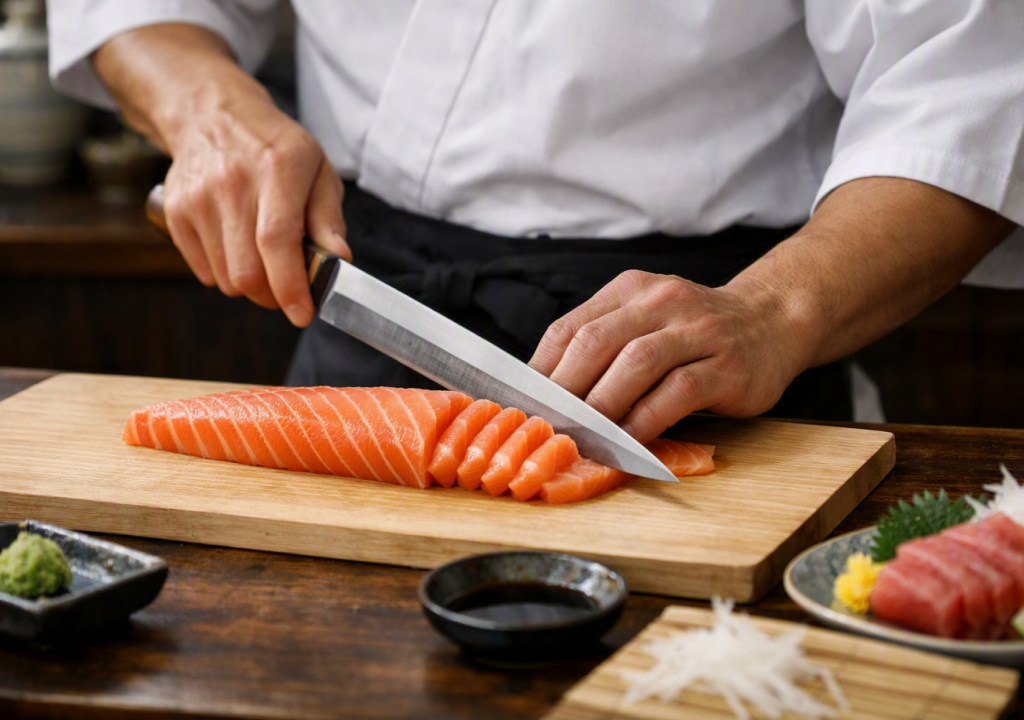
One of the most recognisable is the Yanagiba, a long, narrow knife traditionally used for slicing sashimi.
Its long blade allows the chef to make a smooth, single-direction cut through the fish rather than repeatedly sawing back and forth.
This is particularly important when preparing delicate raw fish.
A clean cut helps preserve the fish’s natural structure and creates a smooth surface that feels delicate on the palate.
Other Japanese knives, such as the Deba, are designed for heavier preparation work, including breaking down whole fish, while the Usuba is traditionally associated with precision vegetable cutting.
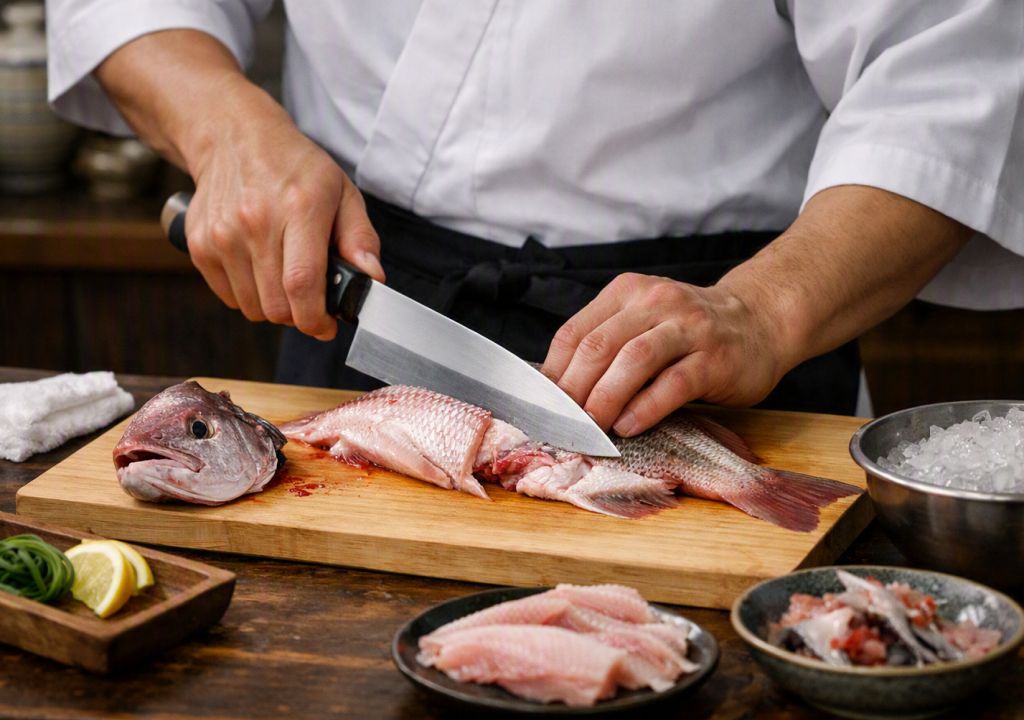
Each knife has its own role.
For a skilled sushi chef, choosing the appropriate knife is the first step toward achieving the desired result.
Why Knife Sharpness Matters
A sushi knife must be exceptionally sharp.
This may seem surprising because sushi preparation often involves soft, delicate ingredients. However, that is precisely why sharpness is so important.
A dull knife can crush or tear fish rather than cutting it cleanly.
When the blade is sharp, the chef can make a controlled movement through the fish while applying minimal pressure.
This helps maintain:
- The fish’s natural texture
- The appearance of the cut
- The moisture within the flesh
- The structure of the muscle fibres
- The overall mouthfeel
The goal is not simply to cut the fish.
The goal is to cut it without damaging it.
This distinction is one of the foundations of professional sushi preparation.
The Importance of Understanding the Fish
Knife skills are not just about knowing how to hold a knife.
A sushi chef must understand the ingredient being cut.
Different fish have different textures, muscle structures, fat content and grain directions. The chef needs to recognise these characteristics before making the first cut.
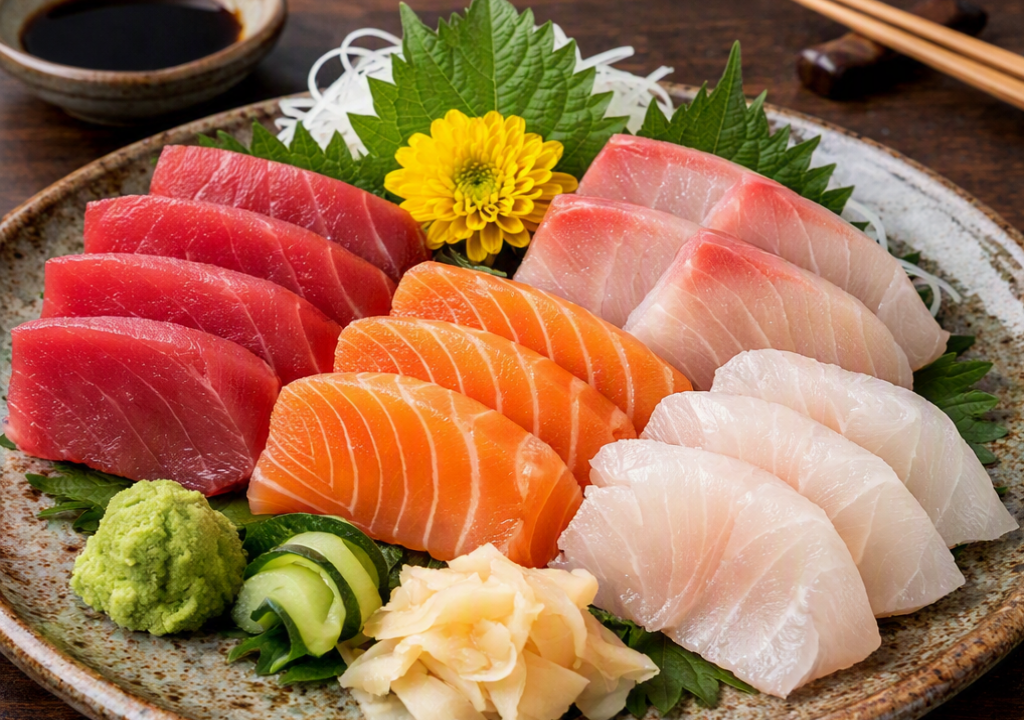
For example, tuna, salmon, yellowtail and white fish can require different cutting approaches.
The chef considers:
The grain of the fish
Muscle fibres run in particular directions. Understanding these fibres helps the chef determine how the fish should be sliced.
The thickness of the cut
Different fish and different styles of sushi may require different slice thicknesses.
The texture
A firmer fish may require a different technique from a delicate, soft fish.
The fat content
Fatty fish can behave differently under the knife and may require particularly controlled movements.
This is why experienced sushi chefs do not simply cut every piece of fish in the same way. They adapt their technique to the ingredient.
The Art of the Single Cut
One of the defining characteristics of sashimi preparation is the smooth, controlled slicing motion.
Rather than moving the knife repeatedly back and forth, a skilled chef often uses a long drawing motion.
The blade travels through the fish with control and consistency.
This technique requires:
- A sharp blade
- Proper knife positioning
- Controlled pressure
- Stable hand movement
- Knowledge of the fish’s structure
The result is a slice with a clean surface and consistent texture.
It is a deceptively simple movement.
For someone watching an experienced sushi chef, the motion may appear effortless.
But behind that effortless movement are years of practice.
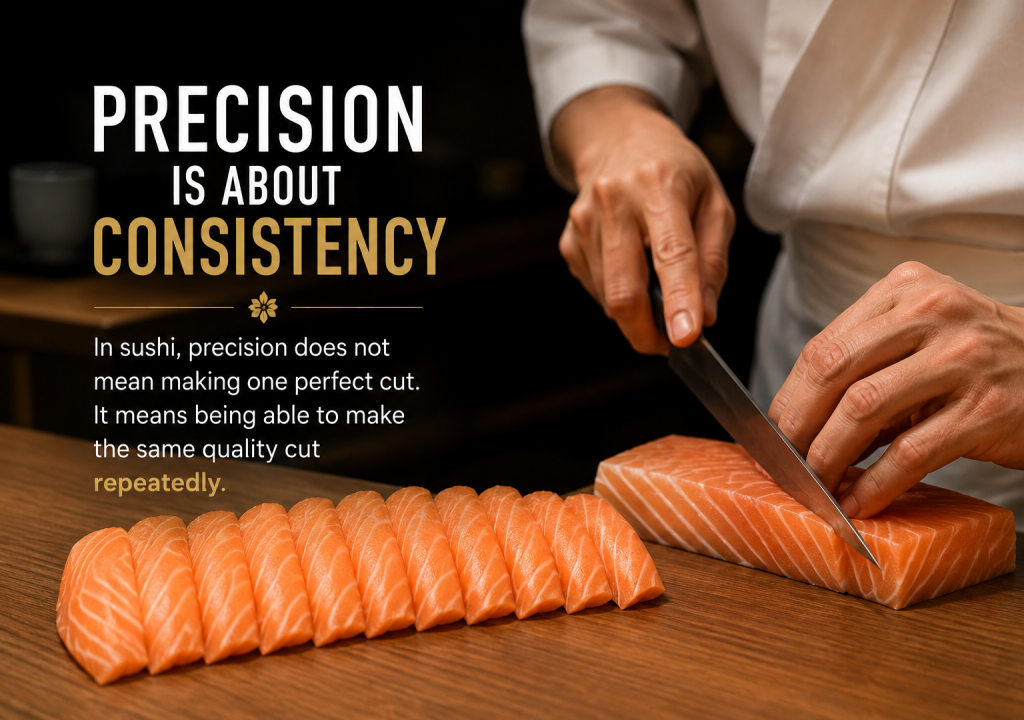
Precision Is About Consistency
In sushi, precision does not mean making one perfect cut.
It means being able to make the same quality cut repeatedly.
Imagine a plate of sashimi containing several pieces of the same fish.
Each slice should have an appropriate thickness and shape so that the diner experiences a consistent texture and flavour.
This requires remarkable control.
The chef must consider the angle of the knife, the pressure applied, the position of the fish and the length of the cutting motion.
Even small differences can affect the final result.
Consistency is therefore one of the clearest signs of a highly trained sushi chef.
Knife Angle Makes a Difference
The angle at which a knife meets the fish can influence the shape and texture of the resulting slice.
A sushi chef learns to adjust the angle according to the ingredient and the desired result.
The blade should move with intention rather than force.
This is particularly important when preparing sashimi, where the surface of each slice is visible.
A beautifully cut piece of fish can have a smooth, almost glass-like appearance.
That visual quality is not accidental.
It is the result of blade sharpness, knife angle, hand control and years of experience.
Cutting Against the Grain
Understanding the grain of the fish is another important part of sushi knife technique.
Fish muscle consists of fibres that run in particular directions. Cutting across these fibres can create a more tender and pleasant texture.
The chef therefore studies the structure of the fish before deciding how to slice it.
This is especially important for certain firmer varieties of fish.
The same ingredient can feel noticeably different depending on how it has been cut.
This demonstrates an important principle of Japanese cuisine:
Technique can transform the way an ingredient is experienced.
The Relationship Between Knife and Hand
A sushi chef’s knife technique is not powered by strength.
It is based on control.
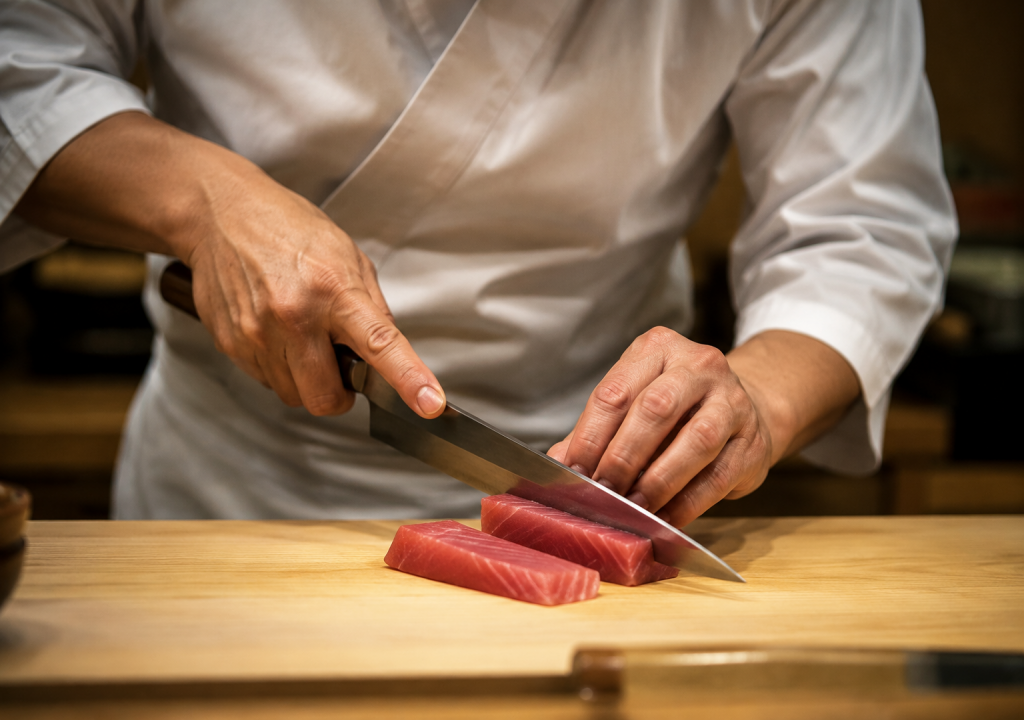
The chef’s dominant hand guides the knife while the other hand carefully positions and stabilises the ingredient.
The movement should be smooth and deliberate.
Excessive force can damage delicate ingredients.
The chef therefore develops a sense of touch that allows them to understand how the knife is interacting with the fish.
Over time, the movement becomes almost instinctive.
This is one reason sushi preparation can look almost choreographed when performed by an experienced chef.
Knife Skills and Sushi Rice
Knife skills are not limited to sashimi.
The same philosophy of precision extends to other elements of sushi preparation.
Nigiri sushi, for example, requires carefully prepared fish slices that are proportionate to the rice beneath them.
The fish should complement the rice rather than overwhelm it.
The chef considers the size, thickness and shape of the fish before placing it over the rice.
The result should feel balanced in the hand and in the mouth.
This is where knife skills become part of the larger art of sushi making.
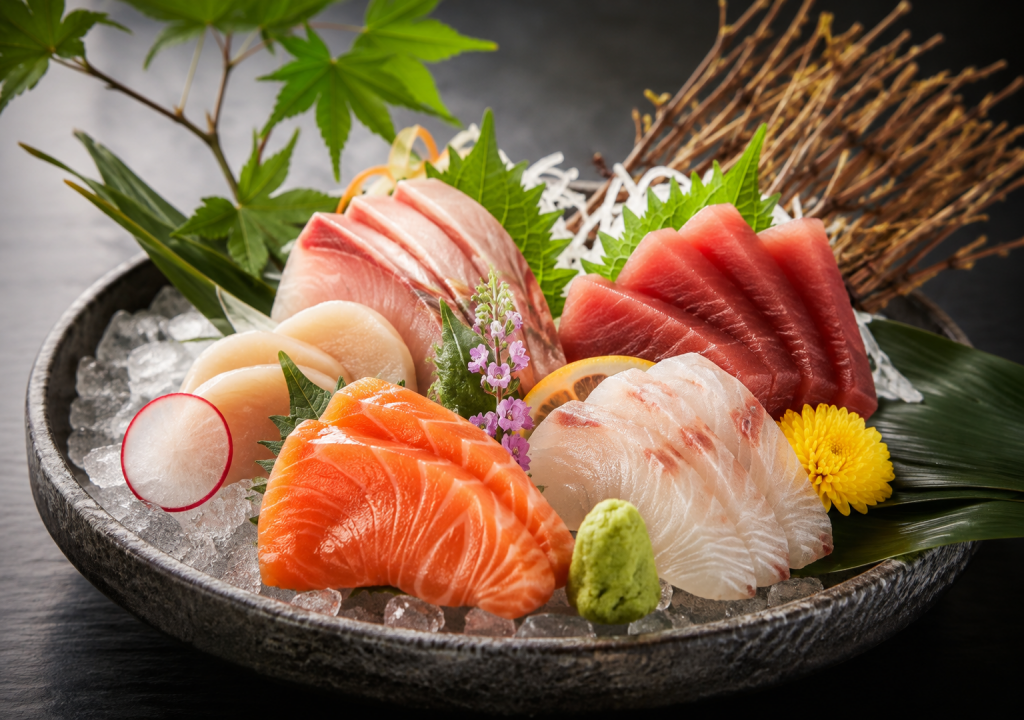
The Visual Art of Sashimi
Sashimi is often described as an expression of simplicity.
There may be only a few ingredients on the plate, but every detail matters.
The shape of the slices, their thickness, their arrangement and even their orientation contribute to the presentation.
A sushi chef therefore thinks about the plate as a composition.
The fish becomes the centrepiece.
Garnishes provide contrast.
The arrangement creates rhythm and balance.
The knife is the tool that makes this possible.
A beautifully prepared sashimi plate demonstrates that Japanese culinary artistry does not necessarily require complexity.
Sometimes, perfection comes from doing something simple exceptionally well.
Years of Training Behind Every Slice
Professional sushi chefs spend years developing their knife skills.
The process requires patience and repetition.
A chef must learn how to:
- Handle knives safely and confidently
- Maintain and sharpen blades
- Break down different types of fish
- Identify the direction of muscle fibres
- Control cutting angles
- Produce consistent slices
- Adapt techniques to different ingredients
- Present food with precision
These skills are developed through repeated practice.
The chef gradually learns how ingredients behave under the blade.
With time, movements become more efficient and controlled.
This dedication is part of the traditional Japanese approach to craftsmanship, where mastery is achieved through continuous refinement.
The Philosophy of “Less Is More”
One of the most fascinating aspects of sushi is its simplicity.
A piece of nigiri may contain only rice, fish and a small amount of seasoning.
Sashimi may contain nothing more than beautifully sliced fish accompanied by carefully selected garnishes and condiments.
There is nowhere to hide poor technique.
When there are only a few ingredients, every detail becomes important.
The knife therefore plays a central role in allowing the natural quality of the fish to shine.
The chef does not need to transform the fish into something unrecognisable.
Instead, the objective is to reveal its best qualities.
Respect for the Ingredient
At the heart of Japanese cuisine is respect for ingredients.
A sushi chef works with fish that has been carefully selected for quality and freshness. The chef’s responsibility is to handle that ingredient with care.
This philosophy can be seen in the way the knife is used.
There is no unnecessary movement.
There is no excessive manipulation.
Every cut serves a purpose.
The fish is treated with enough precision to preserve its natural qualities.
This is why sushi knife skills are not merely technical skills.
They are also an expression of culinary respect.
The Difference Between Cutting and Craftsmanship
Anyone can use a knife to cut fish.
A sushi chef learns how to use the knife to create an experience.
The difference lies in intention.
A professional chef thinks about what the diner will experience when the fish reaches the palate.
Will the texture be tender?
Will the slice have the right thickness?
Will the fat and flavour develop naturally?
Will it complement the rice?
Will it look beautiful on the plate?
Every one of these questions can influence the way the chef handles the knife.
That is what transforms knife work from a basic kitchen task into culinary craftsmanship.
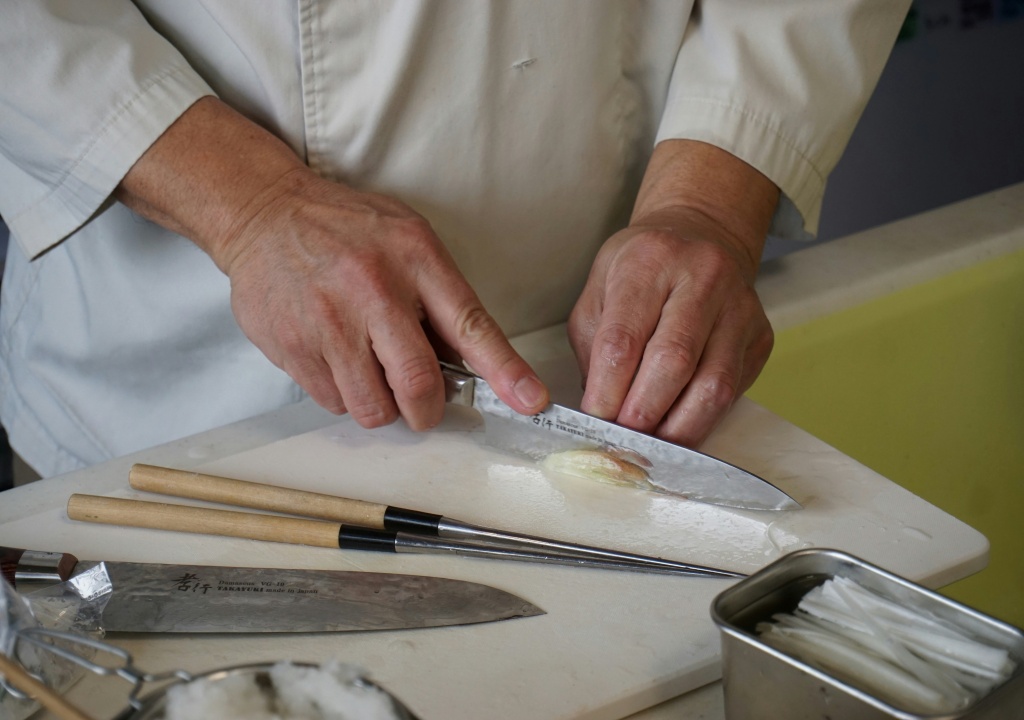
Why Sushi Chefs Take Care of Their Knives
A high-quality Japanese knife requires care.
Professional sushi chefs understand that maintaining a blade is part of their craft.
Knives need to be kept clean, properly stored and regularly sharpened.
Sharpening itself requires knowledge and patience.
The objective is to maintain the blade’s geometry and sharpness rather than simply removing metal from the knife.
A well-maintained knife allows the chef to work with greater precision and control.
In many traditional kitchens, the knife represents the chef’s professionalism.
It is treated as an important part of the chef’s identity and working practice.
Knife Skills as a Form of Japanese Art
Japanese craftsmanship is often associated with attention to detail.
Whether it is ceramics, calligraphy, woodworking or cuisine, there is a strong appreciation for precision and refinement.
Sushi knife skills fit naturally within this philosophy.
The chef repeats movements thousands of times, constantly looking for small improvements.
A slightly cleaner cut.
A more consistent slice.
A smoother movement.
A better presentation.
Over time, these small improvements become mastery.
This is what makes watching an experienced sushi chef so fascinating.
The movements may be simple, but the skill behind them is extraordinary.
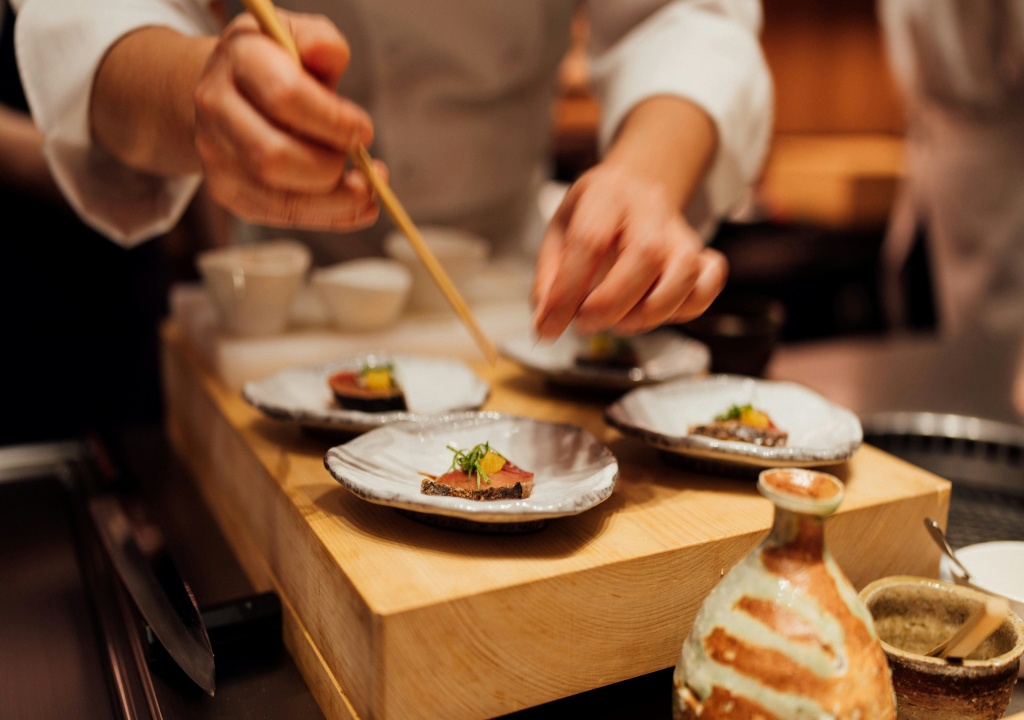
From the Chef’s Hands to Your Table
At Shinzo Japanese Cuisine, every sushi experience begins long before the dish reaches the table.
It begins with ingredient selection.
It continues through preparation.
Then comes the careful work of the sushi chef.
The fish is inspected, prepared and cut according to its characteristics.
The knife moves with precision.
The slices are arranged thoughtfully.
The sushi is then presented to the diner at its best.
For the guest, the final experience may last only a few minutes.
For the chef, however, that moment represents years of training, discipline and attention to detail.
Experience the Art of Sushi at Shinzo Japanese Cuisine
At Shinzo Japanese Cuisine, we believe that exceptional sushi is built on the fundamentals: quality ingredients, skilled preparation, balance and respect for Japanese culinary traditions.
The next time you enjoy a piece of sashimi or nigiri, take a moment to look closely at the fish.
Notice the smoothness of the cut.
Look at the consistency of the slices.
Observe how the fish sits naturally with the rice.
These details are easy to overlook, but they are part of what makes expertly prepared sushi so special.
Behind every elegant slice is a chef, a knife and years of dedication.
Sushi is not simply about cutting fish. It is about understanding the ingredient, respecting its natural qualities and using precision to bring out its best.
That is the artistry of the sushi chef.
And at Shinzo Japanese Cuisine, this artistry is part of every dining experience.
Final Thoughts
The knife skills of a sushi chef represent a beautiful combination of precision, patience, knowledge and artistry.
From choosing the right knife to understanding the grain of the fish, every step influences the final experience.
A perfectly sliced piece of sashimi may look simple, but behind that simplicity lies years of training.
The sharpness of the blade, the angle of the cut, the direction of the movement and the chef’s understanding of the ingredient all come together to create something that looks effortless.
That is the beauty of Japanese cuisine.
When technique becomes invisible, the ingredient takes centre stage.
At Shinzo Japanese Cuisine, we invite you to experience sushi where craftsmanship meets freshness, and where every carefully prepared piece tells a story of Japanese culinary tradition.

Leave a Reply